Biomedizinische Forschung

The Core Facility Preclinical Imaging focuses on establishing preclinical imaging techniques in animal and in vitro models and their application in biomedical research. The standardized integration of preclinical imaging into basic research and translational projects, ongoing developments, and collaborations aim to reduce, refine, and replace animal testing, thereby promoting the effective implementation of the 3R principles. 

Präklinische Bildgebung

In vivo bedeutet wörtlich „innerhalb der Lebenden“. Bildgebungstechniken ermöglichen es, natürliche Prozesse und Krankheiten bei lebenden Organismen nicht- bis minimal-invasiv zu untersuchen und Entwicklungen und Reaktionen über einen längeren Zeitraum hinweg zu überwachen. Darüber hinaus, können auch ex vivo Proben und Materialen mit hoher Auflösung dargestellt werden.

So können, unter Verwendung modernster Techniken, Bilder in verschiedenen Ebenen darstellen, vom Ganzkörperbild bis hin zu zellulären Strukturen. Hierfür stehen folgende Verfahren zur Verfügung:

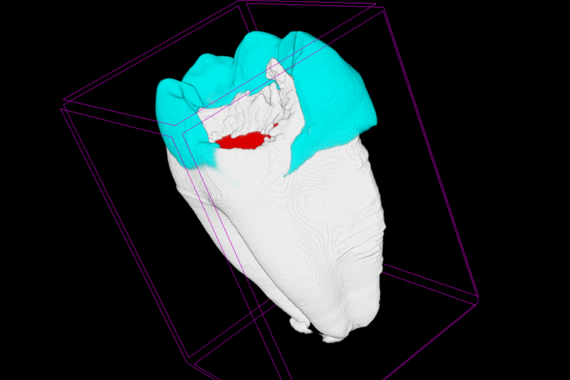
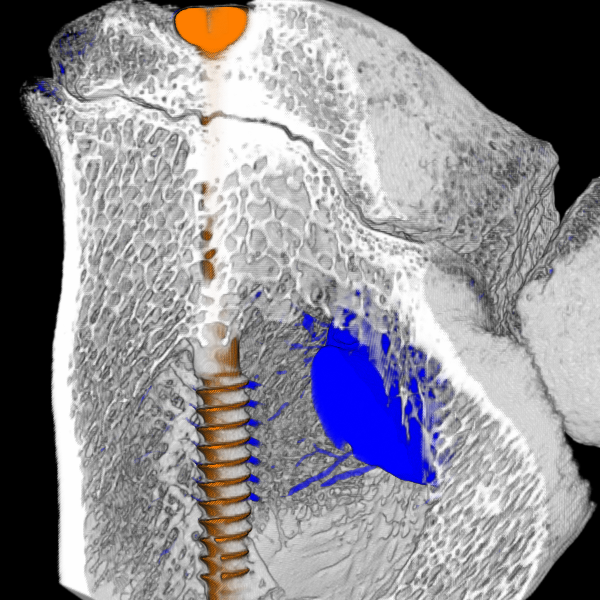
  • mikroComputertomographie: Sichtbar gemacht wird die unterschiedliche Durchlässigkeit der Röntgenstrahlung von Geweben und Materialien. Die Darstellung erfolgt in 3 Ebenen.

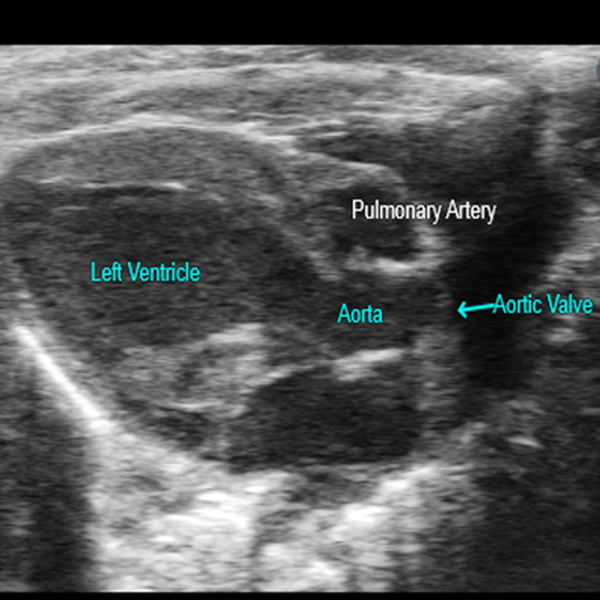
  • mikroUltraschall: Sichtbar gemacht werden verschiedene physiologische oder anatomische Strukturen durch hochfrequente Schallwellen als hochauflösendes 2D-, 3D- oder 4D-Bild.

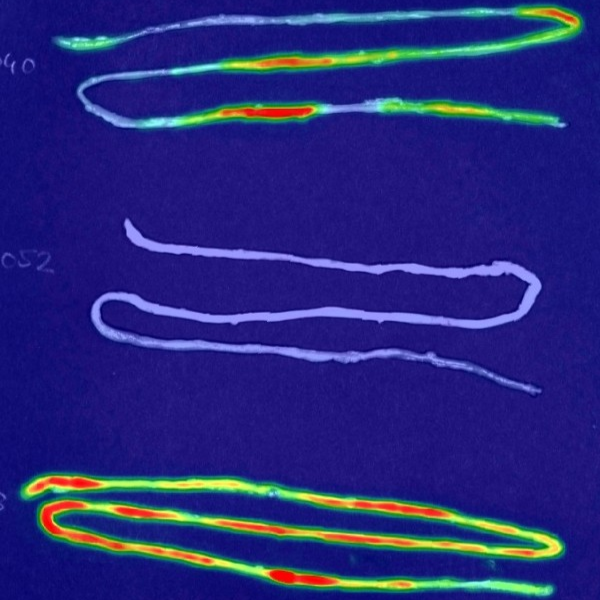
  • Optische Bildgebung basierend auf Fluoreszenz und/oder Biolumineszenz: Bei Nutzung von Fluoreszenzsignalen werden Moleküle detektiert, die das Licht einer bestimmten Wellenlänge absorbieren und einer anderen Wellenlänge emittieren. Bei der sensitiveren Biolumineszenz wird ein Substrat (Luciferin) im Tier metabolisiert (Enzym Luciferase), wobei Licht emittiert und detektiert wird.

In addition, the following equipment and rooms are managed by the Core Facility Preclinical Imaging:

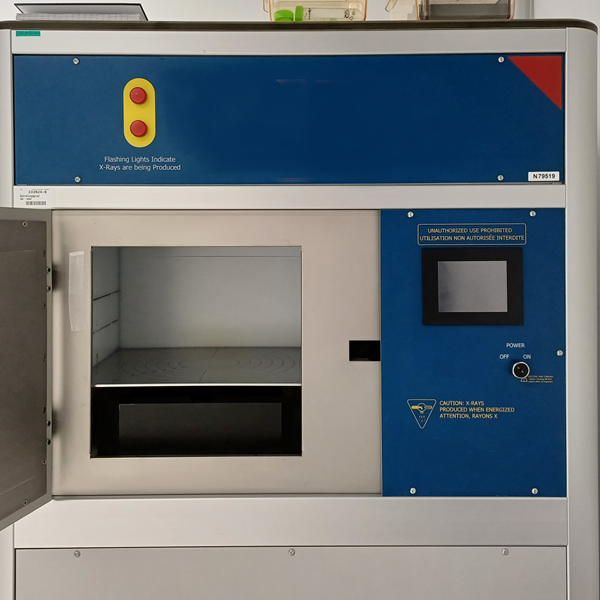
  • Biological irradiator RS2000 (RadSource) and S2 workbench
  • Cell culture laboratory for working with isolated tissue or cells of human or animal origin

The systems of the Core Facility Preclinical Imaging can be used for various purposes (see applications and technical details for the respective systems). The Core Facility Preclinical Imaging team is available to answer any questions you may have regarding project planning and implementation.

SkyScan 1276 High Resolution in vivo X-Ray Micro-computed tomograph (Bruker)

Micro-computed tomography is a non-invasive radiological cross-sectional imaging technique with very high resolution, and it can be used for pathological and physiological analyses as well as for material investigations.

An anesthesia unit connected to the device is available for in vivo examinations of small rodents (mice, rats). 

The use of well-developed contrast agents allows not only the visualization of bones, but also the examination of soft tissue.

A high-performance workstation (Dual Xeon with 128 GB RAM) is available for data evaluation and post-processing in 2D and 3D. The reconstruction, inspection, visualization, and analysis of the internal object structure is performed using Bruker 3D.SUITE software (Bruker).

To deliver a satisfactory result, a clarifying discussion before the start of the project is essential. This discussion will clarify the specific issues involved in the project, the analysis options, and the estimated time and cost involved. The Preclinical Imaging team will then establish and carry out the analyses and evaluations accordingly.


Applications

• Quantification of adipose tissue

• Lung examinations

• Soft tissue examinations using contrast agents

• Bone structure analyses, density measurements, and implant examinations

• Material examinations


Device specifications for in vivo, ex vivo, in vitro analyses

• Cooled CCD X-ray detector

• Detector pixels 4032x 2688

• Max. FOV 80 x 300 mm

• 20-100 kV

• 2.8 μm smallest pixel (ex vivo)

• 5-6 μm details with more than 10% contrast


Data analysis: 3D.SUITE software

• SKYSCAN 2214: Instrument control and data acquisition software

• NRECON: Reconstructs 3D volumes from 2D projection images

• DATAVIEWER: Data analysis for layer-by-layer inspection of 3D volumes and 2D/3D image registration

• CTVOX: Realistic visualization through volume rendering

• CTAN: 2D/3D image analysis and processing

• CTVOL: Visualization of surface models for export to CAD or 3D printing

Micro-ultrasound Vevo3100 (Fujifilm, Visualsonics)

The user-friendly Vevo 3100 is the world's first touchscreen-based preclinical ultrasound system. All four transducers of the system can be used on different samples in all available modes. 

With a resolution of up to 30 µm, the Vevo3100 ultrasound system enables non-invasive examinations in real time. In addition to 2D, 3D, and 4D imaging, this also includes highly accurate cardiovascular examinations and organ examinations. 

An adaptable injection arm enables the targeted image-guided injection of substances and cells (e.g., drug delivery, orthotopic models). 

The use of contrast agents (e.g., microbubbles) also improves the visualization of blood flow in comparison to the surrounding tissue.

A monitoring unit allows the animal's vital signs, such as physiology, ECG, respiration, and body temperature, to be checked and recorded. 


Applications

• Oncological studies (tumor measurement)

• Image-guided injection (orthotopic models)

• Cardiovascular studies

• Organ screening


Device specifications 

• Heated platform for mice or rats

• 3D motor

• Monitoring unit for vital signs

• Injection arm

• Transducer

• MX250: 15–30 MHz; cardiovascular and abdominal area, tumors, all MicroMarker™ applications; Axial resolution: 100 µm

• MX400: 20–46 MHz; abdominal area, cardiovascular, embryology, tumors; Axial resolution: 50 µm

• MX550D: 25–55 MHz; abdominal area, reproductive medicine, cardiovascular, embryology, tumors; Axial resolution: 40 µm

• MX700: 29–71 MHz; vascular area, embryology, superficial tissue, ophthalmology; Axial resolution: 30 µm


Data analysis

• Vevo LAB software

• VevoStrain software package

• VevoVasc software package

Mikro-ultrasound VevoF2 (Fujifilm, Visualsonics)

The new VevoF2 ultrasound system is a next-generation preclinical imaging system that complements the Vevo3100 for preclinical imaging. 

With an extended frequency range, the ultrasound enables high-resolution imaging of various animal models. It supports both detailed surface visualization and penetration into deeper tissue layers, making the VevoF2 suitable for a wide range of research applications.

High-speed imaging ensures even more precise capture of rapid physiological processes. 

The optional integration of the photoacoustic function expands the range of applications and opens up new avenues for advanced functional, molecular, and anatomical analyses.


Applications

• Oncology studies (tumor measurement; hypoxia, angiogenesis)

• Image-guided injection (orthotopic models)

• Cardiovascular studies

• Organ screening

• Neurobiology

• Molecular biology


Device specifications

• Heated platform for mice or rats, including tablet

• 3D motor

• Monitoring unit for vital signs

• Injection arm

• Injection pump

• Photoacoustic capable: Compatible with the LAZR-X laser cart for multimodal imaging

• Triple transducer connection

• Transducer

• UHF71X: 71–30 MHz linear; zebrafish cardiology and abdominal imaging, mouse embryology, vascular and epidermal imaging

• UHF57x: 57–25 MHz linear; Cardiovascular disease in mice, abdominal and reproductive organs, mouse and rat embryology, small rat vessels

• UHF29X: 29–15 MHz linear; rat cardiology and abdominal (<250 g)


Data analysis

• Vevo LAB software

• VevoStrain software package

• VevoVasc software package

LAGO Optical Imaging (Oncomed Solutions/ Bruker)

Optical imaging is a non-invasive imaging technique that can be used to perform pathological and physiological analyses as well as in vitro analyses. 

Either fluorescence or bioluminescence can be used to detect signals. 

An anesthesia unit connected to the device and a heated, light-tight imaging chamber are available for in vivo examinations of small rodents.


Applications

• Oncology studies

• Metabolic studies

• Infection studies

• Orthopedic studies


Device specifications 

• Measurement of fluorescence and bioluminescence

• Maximum capacity for simultaneous in vivo measurement of 10 mice or 3 rats

Ex vivo measurement (e.g., 96-well plates)

• Adjustable field of view (FoV)

• LEDs for fluorescence excitation

• 14 wavelengths for excitation (360 nm – 805 nm, including near-infrared range) and 20 emission filters (490 nm – 870 nm), which can also be freely combined

• -90°C cooled CCD camera

• Absolutely calibrated system – also suitable for data quantification

• Option for serial imaging and kinetics


Data analysis

• Freely available Aura Imaging software for PC/Mac

Director of the Core Facility

Karoline Fechter 
T: +43 316 385 83952